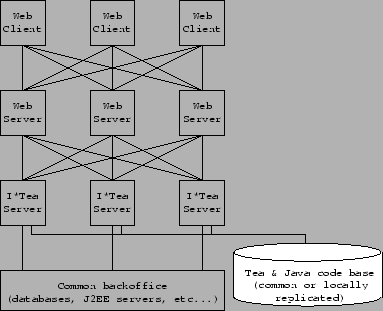
Running over JDK 1.2.1 on Solaris 2.6 on a SPARC CPU at 300Mhz, an I*Tea Server version 1.4 takes aprox. 40 miliseconds to process an HTTP request, rendering simple HTML pages through its HTML library. This value can be taken as a reference value of I*Tea overhead for each request. For a more complex page, the time will increase with the number of HTML objects rendered and backend processing required.
A single I*Tea Server based on a CPU at 400Mhz has been used in call-center helpdesk situations with more than 40 simultaneous clients, with an average of 3 HTTP requests per second (typical request frequency ranges from 1 to 5 requests per second).
It performs acceptably well, and it can scale as well if needed. Besides brute-force CPU power increase, I*Tea applications can achieve scalability through: